
Most parents want the same thing when correcting behavior: helping their children learn from mistakes and make better choices in the future.
But in the moment, it’s easy to confuse punishment with teaching.
When a child spills a drink, forgets a homework assignment, or leaves a favorite toy outside, our first instinct may be to take away privileges or impose a consequence. While punishment may stop a behavior temporarily, it doesn’t always help children understand the connection between their choices and the outcome.
Natural consequences work differently. Instead of focusing on making a child suffer for a mistake, they help children experience the real-world results of their actions. These experiences can build responsibility, problem-solving skills, and accountability in ways that punishment often cannot.
In this article, we’ll explore the difference between natural consequences and punishment, when each approach may be appropriate, and how parents can use everyday situations to help children learn valuable life lessons.
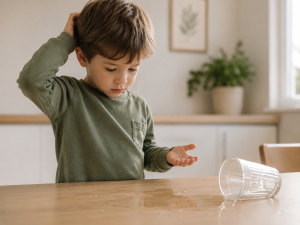
Natural consequences are the results that happen naturally because of a child’s choices or actions. Instead of relying on a parent-imposed punishment, the child experiences the real-world outcome of their behavior.
For example, if a child spills a drink, the natural consequence is that the mess needs to be cleaned up. If they forget to bring a jacket on a chilly day, they may feel uncomfortable until they can warm up. These experiences help children connect their actions with the results that follow.
Natural consequences are most effective when they are safe, age-appropriate, and directly related to the behavior. When children experience these outcomes, they often gain a better understanding of responsibility and learn how their choices affect themselves and others.

Punishment is a consequence that is imposed by a parent or caregiver in response to a child’s behavior. Unlike natural consequences, punishment is often unrelated to the action itself and is intended to discourage the behavior by creating an unpleasant outcome.
For example, if a child spills a drink and loses television privileges for the rest of the day, the consequence is not directly connected to the mistake. While punishment may stop a behavior in the short term, it doesn’t always help children understand why the behavior was a problem or what they should do differently next time.
This doesn’t mean punishment never changes behavior. However, children may become more focused on avoiding consequences than learning responsibility. When possible, helping children understand the connection between their actions and the outcomes can create more meaningful learning opportunities.

──────────────────────────────
Want more practical parenting tips like this?
Join other parents getting simple safety tips, helpful product recommendations, and real-life parenting advice for babies through young kids.
✓ Safety tips many parents don’t realize
✓ Parent-tested products that actually help
✓ Practical ideas you can use right away
Delivered every other week — no spam, no selling or sharing your contact info.
While both natural consequences and punishment are intended to address behavior, they teach very different lessons.
Natural consequences are directly connected to a child’s actions. They help children understand how their choices affect themselves and others. Because the outcome is related to the behavior, children are more likely to develop responsibility, problem-solving skills, and accountability.
Punishment, on the other hand, is often imposed by an adult and may not be directly related to the behavior. While it can discourage unwanted behavior in the short term, children may focus more on avoiding the consequence than understanding the lesson behind it.
The goal is not to eliminate all consequences, but to choose responses that help children learn and grow. When children can clearly see the connection between their actions and the outcomes, they are often better equipped to make thoughtful choices in the future.

Natural consequences can be powerful teaching tools when they are safe, age-appropriate, and directly related to a child’s behavior. They work best when children are able to understand the connection between their actions and the outcome that follows.
For example, if a child forgets to put away a favorite toy and cannot find it later, they learn the importance of keeping track of their belongings. If they leave a school project until the last minute, they may experience the stress of rushing to complete it. These experiences can encourage better decision-making in the future because the lesson comes from the outcome itself rather than from an imposed punishment.
However, natural consequences are not appropriate in situations involving safety. Parents should always step in when a child’s well-being is at risk. The goal is not to allow children to experience harmful consequences, but to provide opportunities for learning when the outcomes are safe and manageable.
When used thoughtfully, natural consequences can help children develop responsibility, independence, and problem-solving skills that will benefit them throughout life.
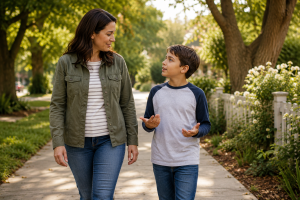
While natural consequences can be valuable learning opportunities, there are times when parents need to step in and provide guidance. A child’s safety and well-being should always come first.
For example, allowing a child to run into a busy street, ride a bicycle without proper safety equipment, or handle something dangerous is not an appropriate natural consequence. In these situations, parents should intervene immediately to prevent harm and teach safe behavior.
There are also times when a natural consequence may be too severe or beyond a child’s ability to understand. Younger children, in particular, may need additional guidance to connect their actions with the outcomes that follow.
When intervention is necessary, parents can still focus on teaching rather than punishing. Calmly explaining expectations, setting clear boundaries, and helping children understand the impact of their choices can turn challenging moments into valuable learning experiences.
The goal is not to let children fail on their own, but to provide the support, guidance, and protection they need while gradually helping them develop responsibility and good judgment.
Everyday mistakes provide some of the best opportunities for children to learn and grow. While it may be tempting to focus on punishment when behavior needs to change, natural consequences can often teach more meaningful and lasting lessons.
When children experience the results of their choices in safe and age-appropriate ways, they begin to understand responsibility, accountability, and problem-solving. They learn that their actions have consequences and that they have the ability to make better choices in the future.
Of course, parents still play an essential role in providing guidance, setting boundaries, and stepping in when safety is a concern. The goal is not to leave children to figure everything out on their own, but to support them as they develop the skills and judgment they will use throughout life.
By focusing on teaching rather than simply punishing, parents can turn everyday experiences into valuable learning opportunities that help children build confidence, responsibility, and independence.
Want more practical parenting tips like this?
Join other parents getting simple safety tips, helpful product recommendations, and real-life parenting advice for babies through young kids.
✓ Safety tips many parents don’t realize
✓ Parent-tested products that actually help
✓ Practical ideas you can use right away
Delivered every other week — no spam, no selling or sharing your contact info.
💾 Save this post—you may want to revisit it the next time you’re deciding how to respond to a challenging behavior.
Helping parents navigate real-life parenting with calm, practical support.
— Modern Kids Max