
Healthy boundaries help children feel safe, secure, and confident as they grow. While some parents worry that boundaries may feel restrictive, the truth is that clear and consistent limits provide children with the structure they need to thrive.
Boundaries teach children what is expected, help them develop self-discipline, and create a sense of stability in their daily lives. When children understand where the limits are, they are better able to make good choices, manage emotions, and build healthy relationships.
In this article, we’ll explore five healthy boundaries every child needs and how these simple guidelines can support their emotional, social, and behavioral development.

Children feel more secure when they know what is expected of them. Consistent rules and expectations help reduce confusion and provide a sense of stability in daily life. Whether it’s cleaning up toys, completing homework, or following bedtime routines, children benefit from knowing the boundaries ahead of time.
When expectations change from day to day, children may struggle to understand what is acceptable, which can lead to frustration and testing limits. Consistency doesn’t mean being rigid; it means providing clear guidance and following through in a predictable way. Over time, consistent boundaries help children develop responsibility, self-discipline, and confidence in their ability to make good choices.

Children learn to trust the adults in their lives when boundaries are clear, consistent, and predictable. When parents follow through on expectations and consequences in a calm and reliable way, children gain confidence that they know what to expect. This sense of predictability helps children feel emotionally secure and supported.
Consistency also strengthens the parent-child relationship. Children may not always like a boundary in the moment, but they benefit from knowing that the rules won’t change based on a parent’s mood or circumstances. Over time, this reliability builds trust, encourages cooperation, and helps children develop confidence in both themselves and the adults who care for them.

──────────────────────────────
Want more practical parenting tips like this?
Join other parents getting simple safety tips, helpful product recommendations, and real-life parenting advice for babies through young kids.
✓ Safety tips many parents don’t realize
✓ Parent-tested products that actually help
✓ Practical ideas you can use right away
Delivered every other week — no spam, no selling or sharing your contact info.
Children need opportunities to develop a sense of independence, and respecting their personal space and privacy is an important part of that process. While parents should remain involved and aware of their children’s activities, allowing age-appropriate privacy helps children feel respected and valued as individuals.
Respecting personal boundaries can be as simple as knocking before entering a bedroom, allowing children to have personal belongings, or giving them space to express their thoughts and feelings without immediate judgment. When children learn that their boundaries are respected, they are more likely to respect the boundaries of others and develop healthy relationship skills that will benefit them throughout life.
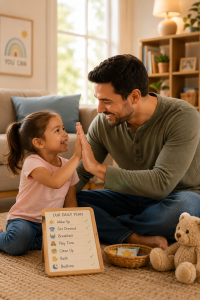
Giving children age-appropriate responsibilities helps them develop important life skills while building confidence in their abilities. Simple tasks such as putting away toys, helping set the table, feeding a pet, or completing homework encourage children to contribute to the family and take pride in their accomplishments.
Responsibilities should match a child’s age and developmental stage. When expectations are realistic and support is provided when needed, children are more likely to succeed and develop a sense of independence. These healthy boundaries teach accountability, problem-solving, and perseverance—skills that will serve children well throughout their lives.

Children benefit most when their effort is recognized rather than only their achievements. Praising hard work, persistence, and improvement helps children develop a growth mindset and understand that mistakes are a natural part of learning. When children feel valued for trying their best, they are more willing to take on challenges and continue learning even when tasks are difficult.
Focusing on effort instead of perfection also reduces unnecessary pressure and anxiety. Children who know they do not have to be perfect are more likely to develop confidence, resilience, and a healthy attitude toward learning and personal growth. By celebrating progress rather than flawless results, parents help children build the skills they need to succeed both now and in the future.
Healthy boundaries help children feel safe, secure, and confident as they grow. By providing consistent expectations, building trust through reliability, respecting personal space, encouraging age-appropriate responsibilities, and celebrating effort over perfection, parents create an environment where children can thrive.
Boundaries are not about control—they are about guidance, support, and helping children develop the skills they need for success. When children understand what is expected and feel supported along the way, they are better equipped to navigate challenges, build healthy relationships, and grow into confident, capable individuals.
Want more practical parenting tips like this?
Join other parents getting simple safety tips, helpful product recommendations, and real-life parenting advice for babies through young kids.
✓ Safety tips many parents don’t realize
✓ Parent-tested products that actually help
✓ Practical ideas you can use right away
Delivered every other week — no spam, no selling or sharing your contact info.
💾 Save this post for the next time you need a reminder that healthy boundaries help children feel safe, secure, and confident.
Helping parents navigate real-life parenting with calm, practical support.
— Modern Kids Max