Simple routines that help kids cooperate
If you feel like you’re constantly repeating yourself—”Get dressed,” “Brush your teeth,” “Clean up your toys”—you’re not alone.
Many power struggles happen because children don’t know exactly what to expect next. When daily tasks feel unpredictable, kids are more likely to resist, stall, or melt down.
The good news? Simple, consistent routines can make everyday life much smoother.
Routines help children feel safe and secure because they know:
When children can predict what comes next, they experience less uncertainty and anxiety. As a result, they are more likely to cooperate.
Children often resist when they feel unsure about what is coming next.
A predictable routine removes the guesswork.
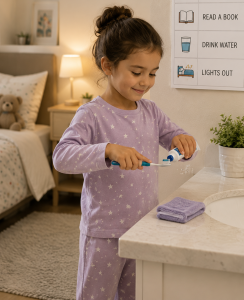
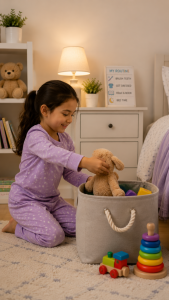
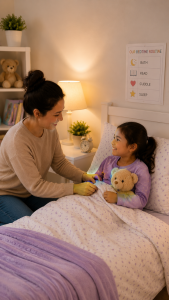
For example, a bedtime routine might look like this:
When this sequence stays the same each night, children know what to expect.
Children gain confidence when they can complete familiar steps on their own.
Instead of waiting for repeated reminders, they begin to take ownership of the process.
When the steps are predictable, parents spend less time nagging and reminding.
The routine becomes the guide instead of the parent having to direct every step.
Children learn through repetition.
The more consistently you follow the same steps, the more cooperative your child becomes over time.
The best routines are simple.
If a routine has too many steps, children can become overwhelmed.
Start with just 3 to 5 steps.
──────────────────────────────
Want more practical parenting tips like this?
Join other parents getting simple safety tips, helpful product recommendations, and real-life parenting advice for babies through young kids.
✓ Safety tips many parents don’t realize
✓ Parent-tested products that actually help
✓ Practical ideas you can use right away
Delivered every other week — no spam, no selling or sharing your contact info.
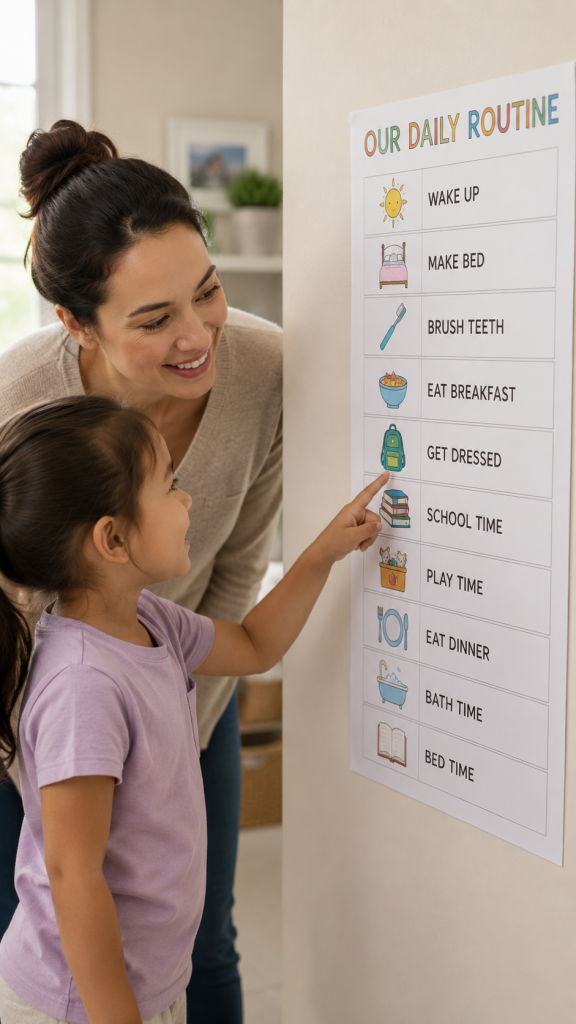
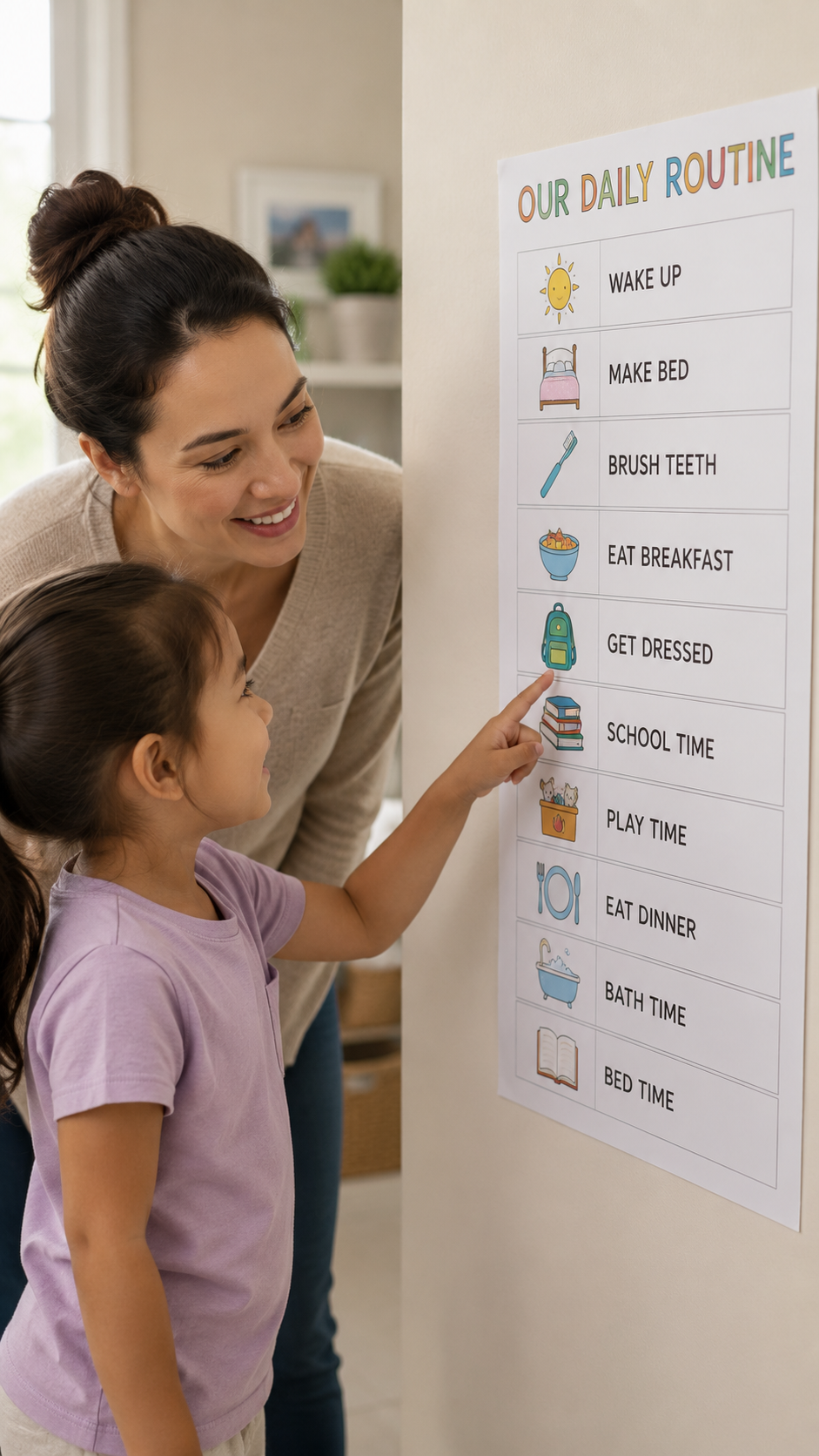
Many children respond especially well to pictures.
A simple chart with images can help them stay on track without constant reminders.
Visual charts are particularly helpful for:
You don’t need to overhaul your entire day.
Choose one routine that feels most stressful right now.
Common starting points include:
Once that routine becomes easier, you can add another.
Routines take time to become habits.
Your child may still resist at first, and that’s normal.
Stay calm, follow the same steps consistently, and trust the process.
Over time, routines reduce power struggles and help your child cooperate more naturally.
Conclusion
If your child only listens sometimes,
it’s not about defiance or attitude.
It’s about patterns.
And when you change the pattern,
their behavior changes too.
Want more practical parenting tips like this?
Join other parents getting simple safety tips, helpful product recommendations, and real-life parenting advice for babies through young kids.
✓ Safety tips many parents don’t realize
✓ Parent-tested products that actually help
✓ Practical ideas you can use right away
Delivered every other week — no spam, no selling or sharing your contact info.
Save this post for easy routines that make mornings, cleanup, and bedtime less stressful.