📌 Save this post
There’s a moment every parent recognizes:
Your child starts doing things on their own — climbing in, opening doors, walking ahead — and it feels like they’re ready for more independence.
But around vehicles, looking ready isn’t the same as being safe.
Many of the highest-risk moments don’t happen during the ride itself.
They happen in the in-between moments:
These are the moments where independence can outpace safety.
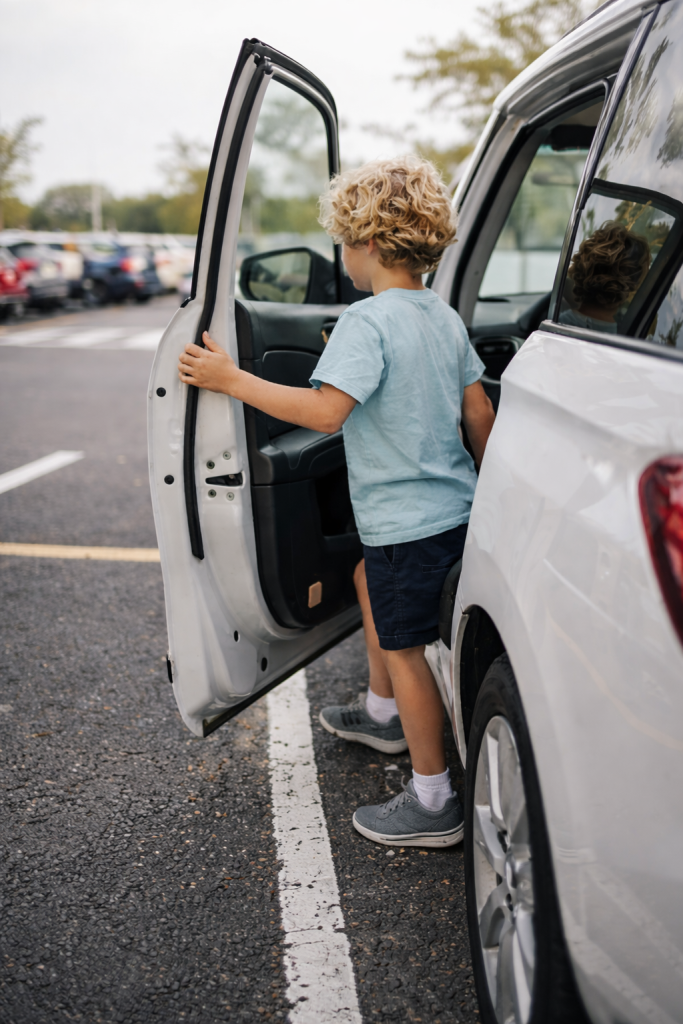
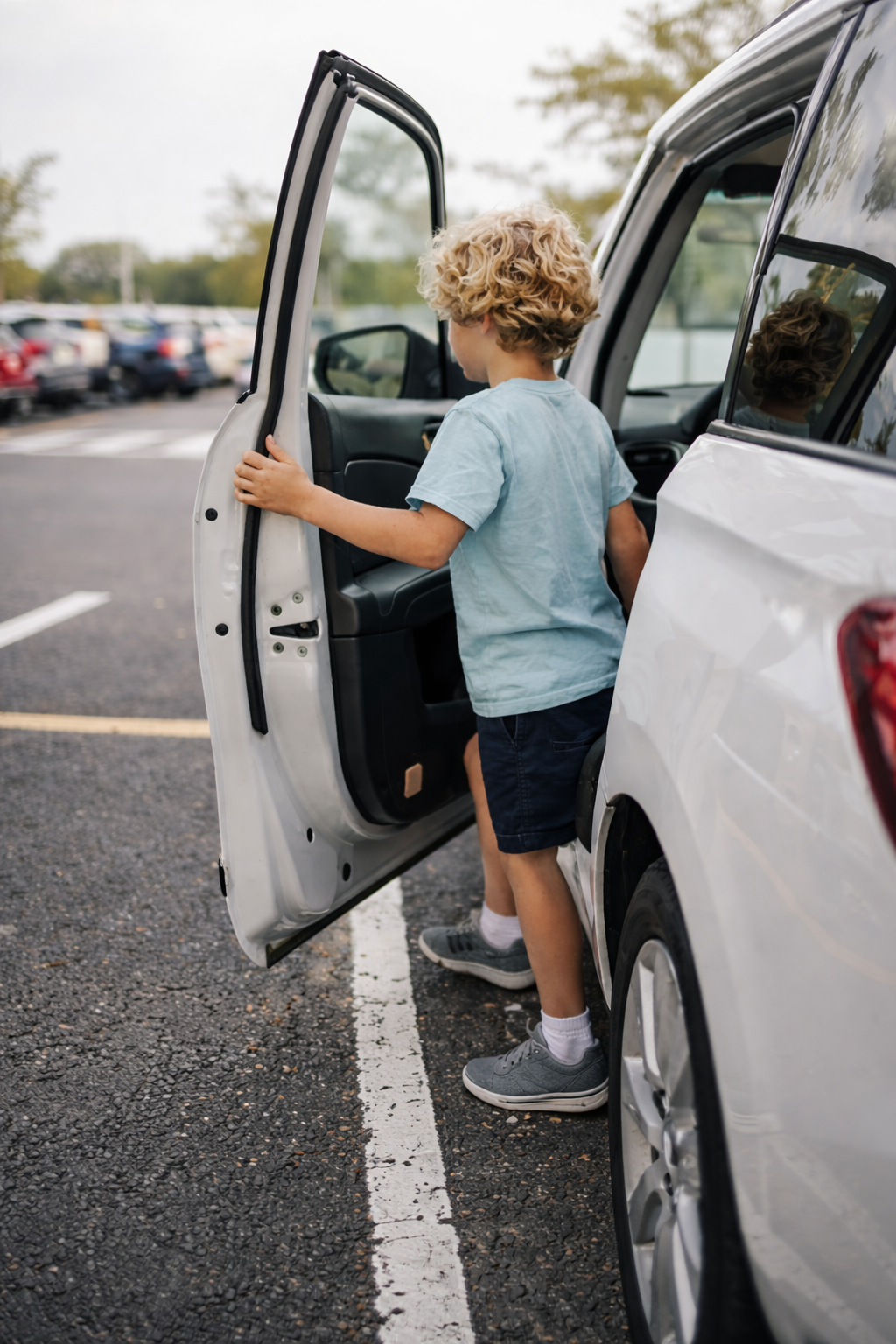
One of the most common (and risky) behaviors is a child getting out of the vehicle before an adult says it’s safe.
This can look like:
Even in familiar places, this creates risk quickly — especially in parking lots where:
A child being able to get out independently doesn’t mean they understand when it’s safe to do it.
Another common situation is a child walking ahead of the adult.
This often happens because:
But even careful kids can:
Consistency matters more than capability.
A child who usually stays close is not the same as a child who always stays safe.

──────────────────────────────
Want more practical parenting tips like this?
Join other parents getting simple safety tips, helpful product recommendations, and real-life parenting advice for babies through young kids.
✓ Safety tips many parents don’t realize
✓ Parent-tested products that actually help
✓ Practical ideas you can use right away
Delivered once every other week — no spam, no sharing or selling your personal data.
Transitions around the vehicle are one of the easiest places for safety to break down.
This includes:
These moments are often rushed or distracting for adults — which makes them even more important to manage intentionally.
The riskiest moments are often the ones that feel the most routine.
Children develop skills in layers.
They may:
But still lack:
Confidence ≠ readiness
Capability ≠ safety
And around vehicles, that difference matters.
Before giving more independence around vehicles, look for:
Even then, adult supervision is still essential.
──────────────────────────────
Want more practical parenting tips like this?
Join other parents getting simple safety tips, helpful product recommendations, and real-life parenting advice for babies through young kids.
✓ Safety tips many parents don’t realize
✓ Parent-tested products that actually help
✓ Practical ideas you can use right away
Delivered once every other week — no spam, no sharing or selling your personal data.
Independence is an important part of growing up.
But around vehicles, it needs to be introduced thoughtfully and gradually.
Because the goal isn’t just:
“They can do it.”
The goal is:
They can do it safely — every time.
If your child is starting to do more on their own around the car, this is the stage where guidance matters most.
Save or share this post as a reminder:
Independence around vehicles doesn’t replace the need for adult supervision.