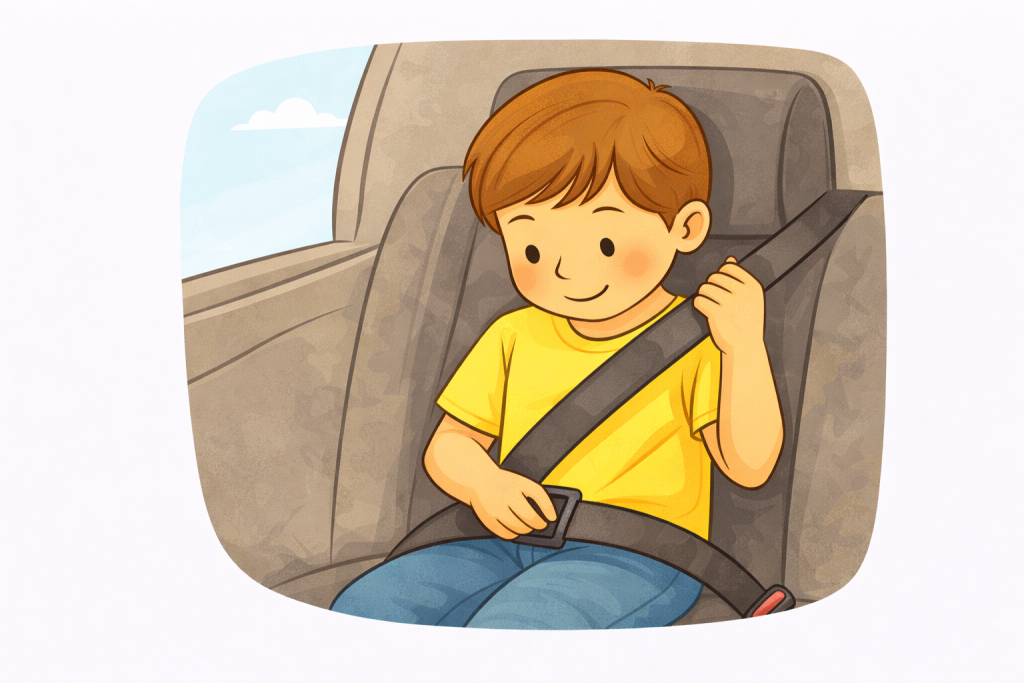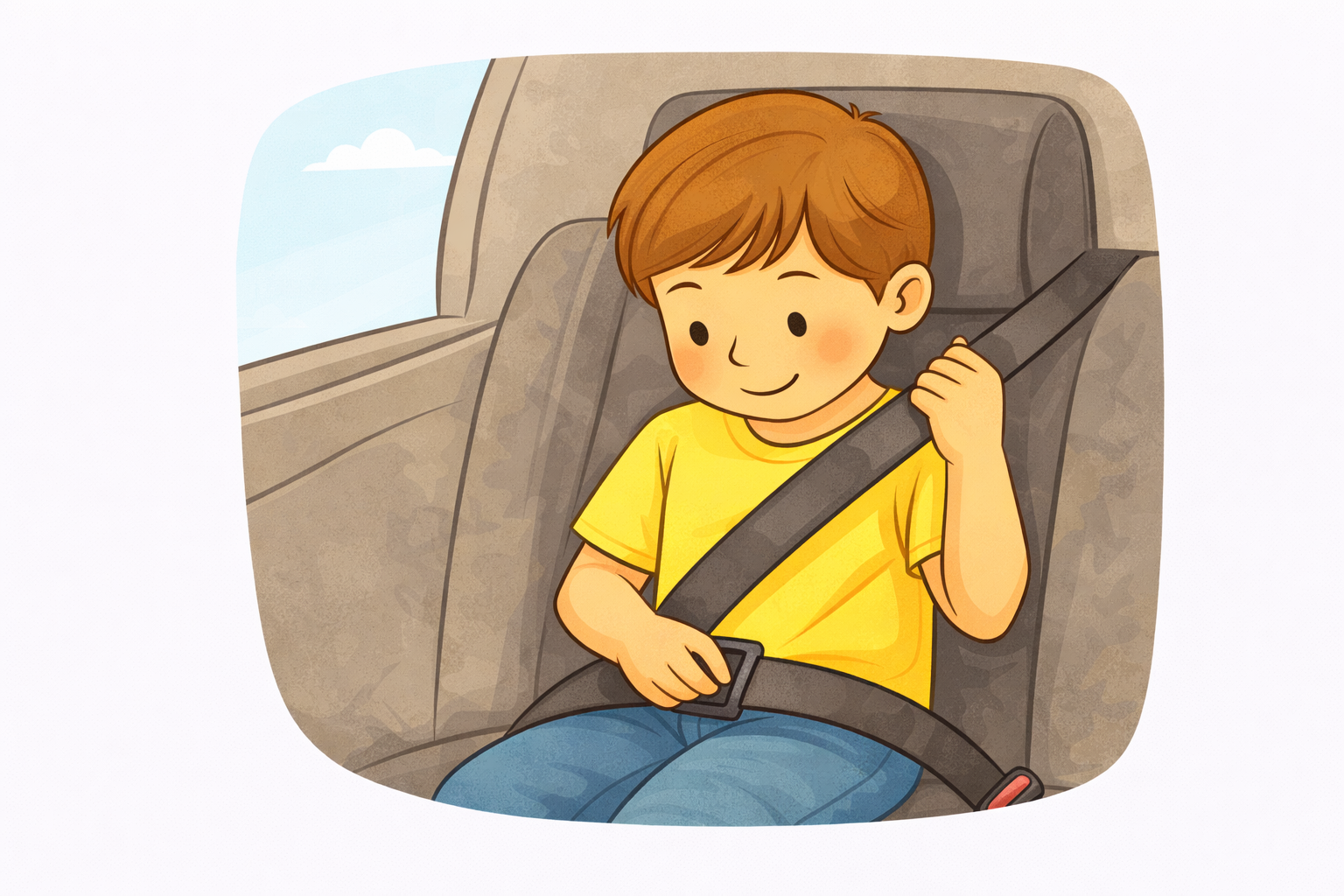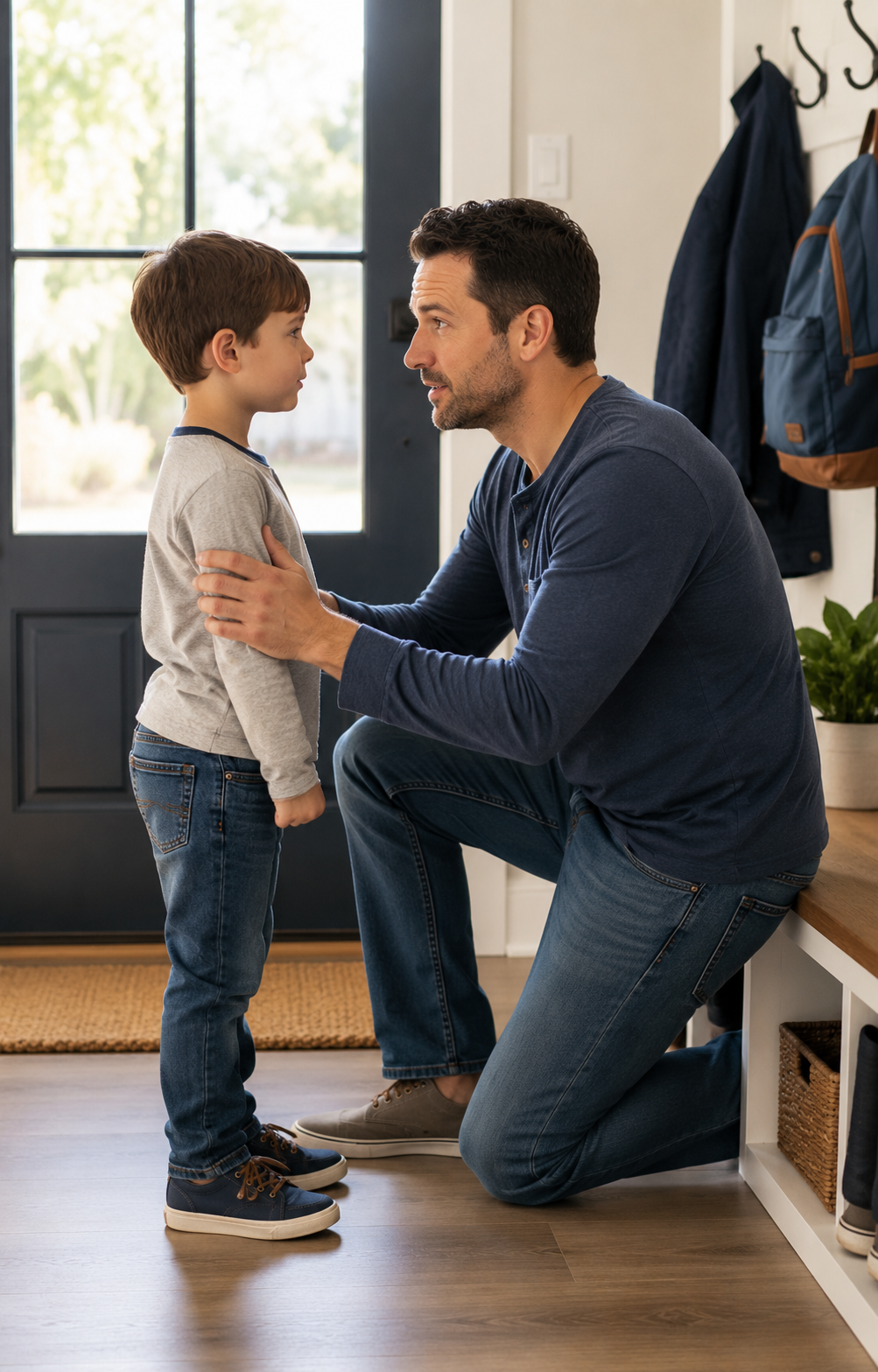
A lot of parents ask one simple question before driving:
“Are you buckled?”
And while that’s an important habit, it doesn’t tell you the whole story.
Because a child being buckled and a child being ready are not always the same thing.
Many kids can click the buckle into place long before they can:
That’s where true independence comes in.
If you’re still checking every ride, your child may not be fully independent with the vehicle seat belt yet — and that’s okay.
The goal isn’t to rush it.
The goal is to teach your child how to buckle, check, and fix their own seat belt correctly before you have to remind them.
Here’s a simple 5-step seat belt readiness check you can use.
The first step is the obvious one:
Can your child buckle the seat belt without help?
But don’t stop there.
A child may be able to click the buckle into place and still not be using the seat belt safely.
What you want to watch for is whether they can:
If they need frequent help getting started, they may not be ready for full independence yet.
Have your child buckle in while the car is parked, then unbuckle and repeat several times so the motion becomes familiar and consistent.
This is one of the most important parts of proper seat belt use.
The shoulder belt should stay:
✅ centered across the shoulder and chest
❌ not tucked under the arm
❌ not pushed behind the back
❌ not riding up on the neck
If your child constantly moves the shoulder belt out of position, that’s a sign they still need supervision and practice.
Sometimes kids do this because the belt feels uncomfortable.
Sometimes they do it because they haven’t learned that comfort doesn’t override safety.
Show your child where the shoulder belt belongs and help them recognize when it has slipped out of place.
A simple phrase can help:
“Shoulder belt on your shoulder.”
Short, consistent reminders are often easier for kids to remember than longer explanations.
──────────────────────────────
Want more practical parenting tips like this?
Join other parents getting simple safety tips, helpful product recommendations, and real-life parenting advice for babies through young kids.
✓ Safety tips many parents don’t realize
✓ Parent-tested products that actually help
✓ Practical ideas you can use right away
Delivered every other week — no spam.
This is the step many parents skip.
A child who is truly becoming independent with the seat belt should be able to notice when something is off and make a simple correction.
That might mean:
This is where independence becomes a safety skill, not just a routine.
Because in real life, things move.
Kids wiggle.
Belts shift.
Clothing bunches.
Position changes.
The question is:
👉 Can your child recognize the problem and fix it before you ask?
If not, that’s the next skill to practice.
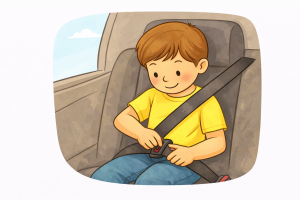
This is the part parents often discover too late.
A child may start the ride perfectly buckled…
and then five minutes later:
That’s why readiness is not just about how they look at the beginning of the ride.
It’s also about whether they can stay in a safe riding position consistently.
Your child should be able to:
If they can’t do that yet, they may still need more time, reminders, or a booster depending on their fit and maturity.
──────────────────────────────
Want more practical parenting tips like this?
Join other parents getting simple safety tips, helpful product recommendations, and real-life parenting advice for babies through young kids.
✓ Safety tips many parents don’t realize
✓ Parent-tested products that actually help
✓ Practical ideas you can use right away
Delivered every other week — no spam.
A child is becoming truly independent with the seat belt when they can:
That’s the difference between:
and
And that difference matters.
Because the goal is not to stop checking too early.
The goal is to teach your child how to check themselves.
The easiest way to teach seat belt independence is through short, repeatable cues.
Instead of giving a long explanation every time, use the same simple phrases consistently:
Over time, these cues become habits.
And habits are what build independence.
This approach also helps reduce the need for constant reminders from the front seat.
Instead of:
“Are you buckled?”
“Is your belt right?”
“Fix that.”
“Sit back.”
“No, not like that…”
You’re teaching your child to run through the checklist themselves.
That’s a much stronger long-term skill.
If you’re still checking every ride, that doesn’t mean you’re doing anything wrong.
It just means your child may still be learning what safe seat belt independence actually looks like.
And that’s exactly what they’re supposed to be doing:
learning it before they’re expected to manage it alone.
A child doesn’t become ready just because they can buckle.
They become ready when they can:
👉 buckle
👉 check
👉 fix
👉 stay safe without being reminded
That’s real independence.
Save this 5-step seat belt check and come back to it anytime.
And if this helped, follow @ModernKidsMax for simple, safety-focused parenting tips.